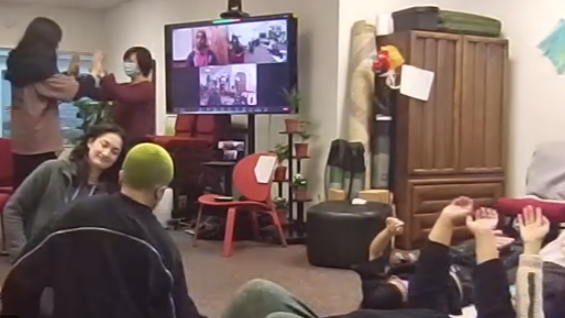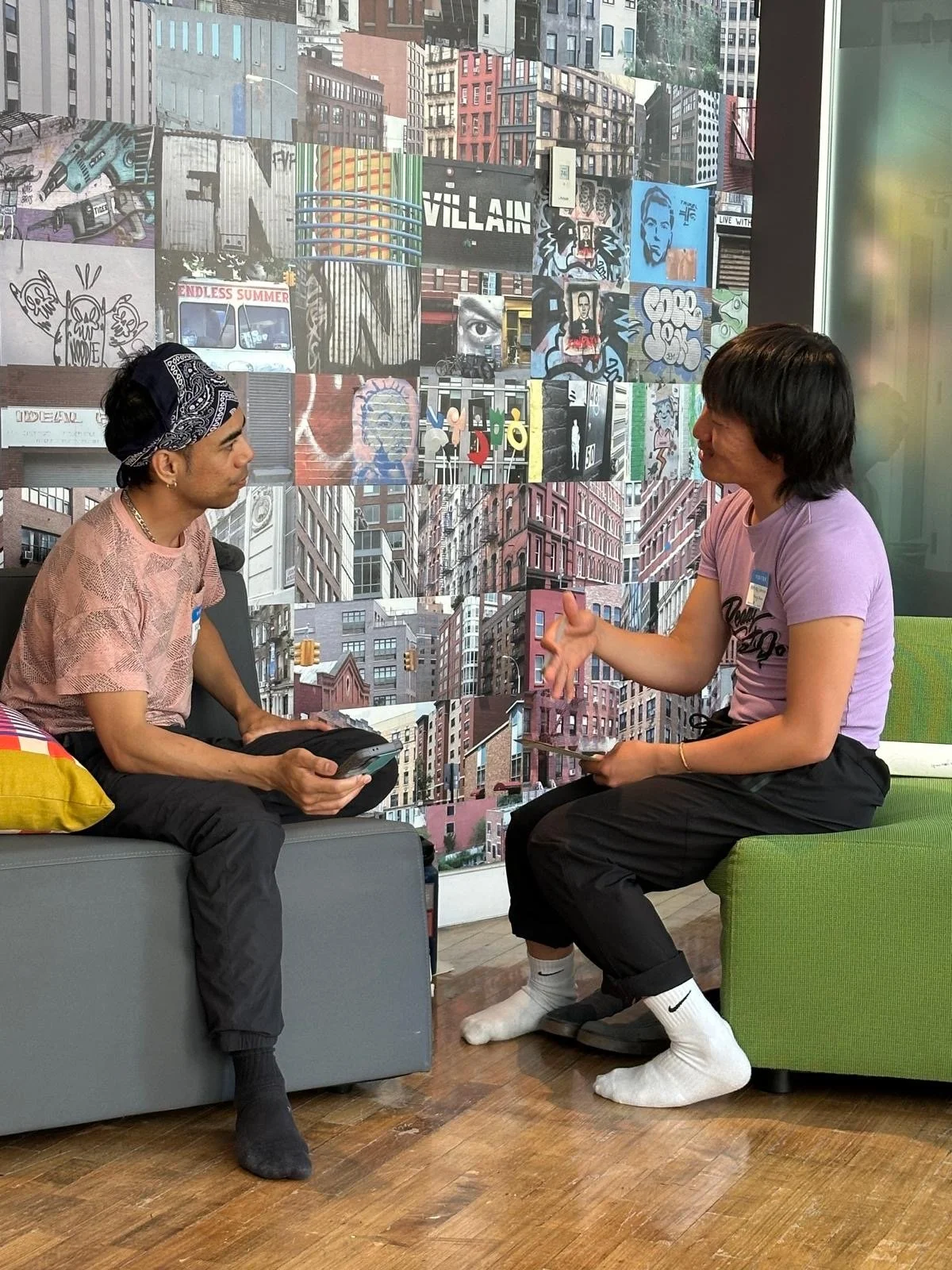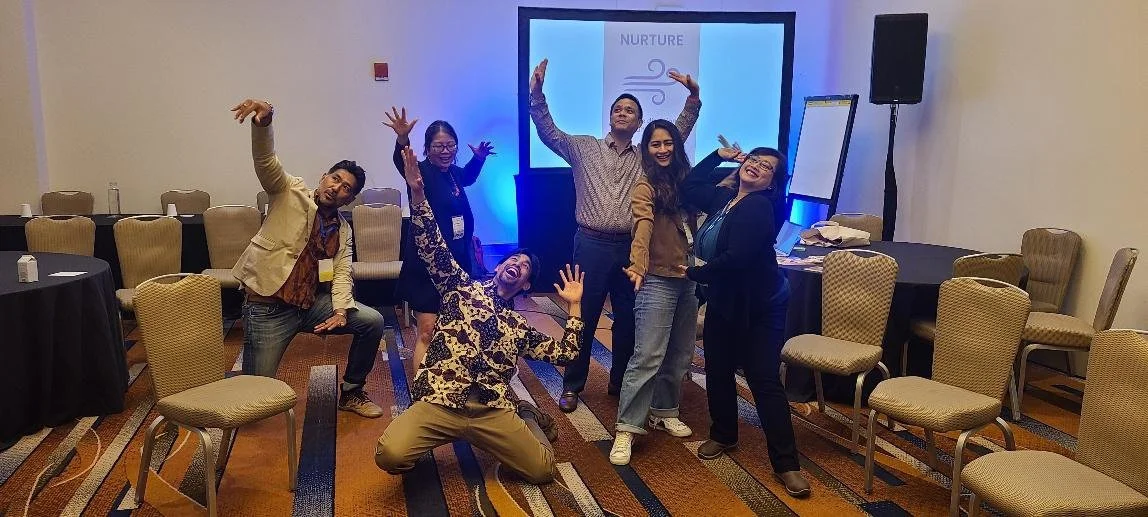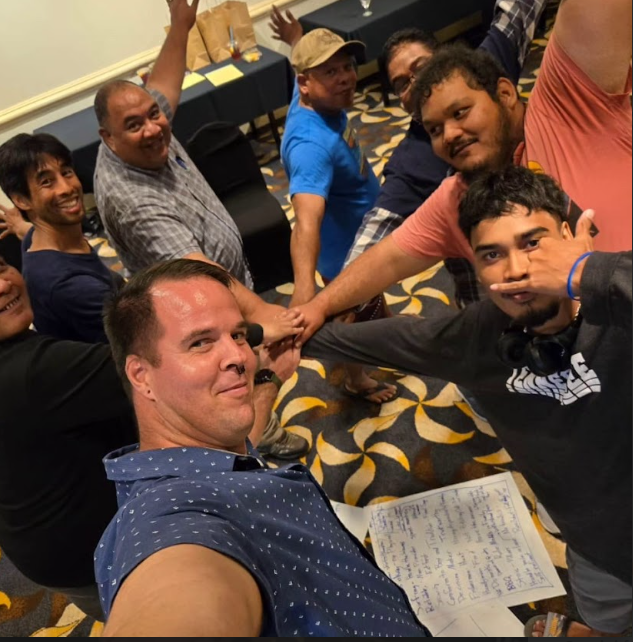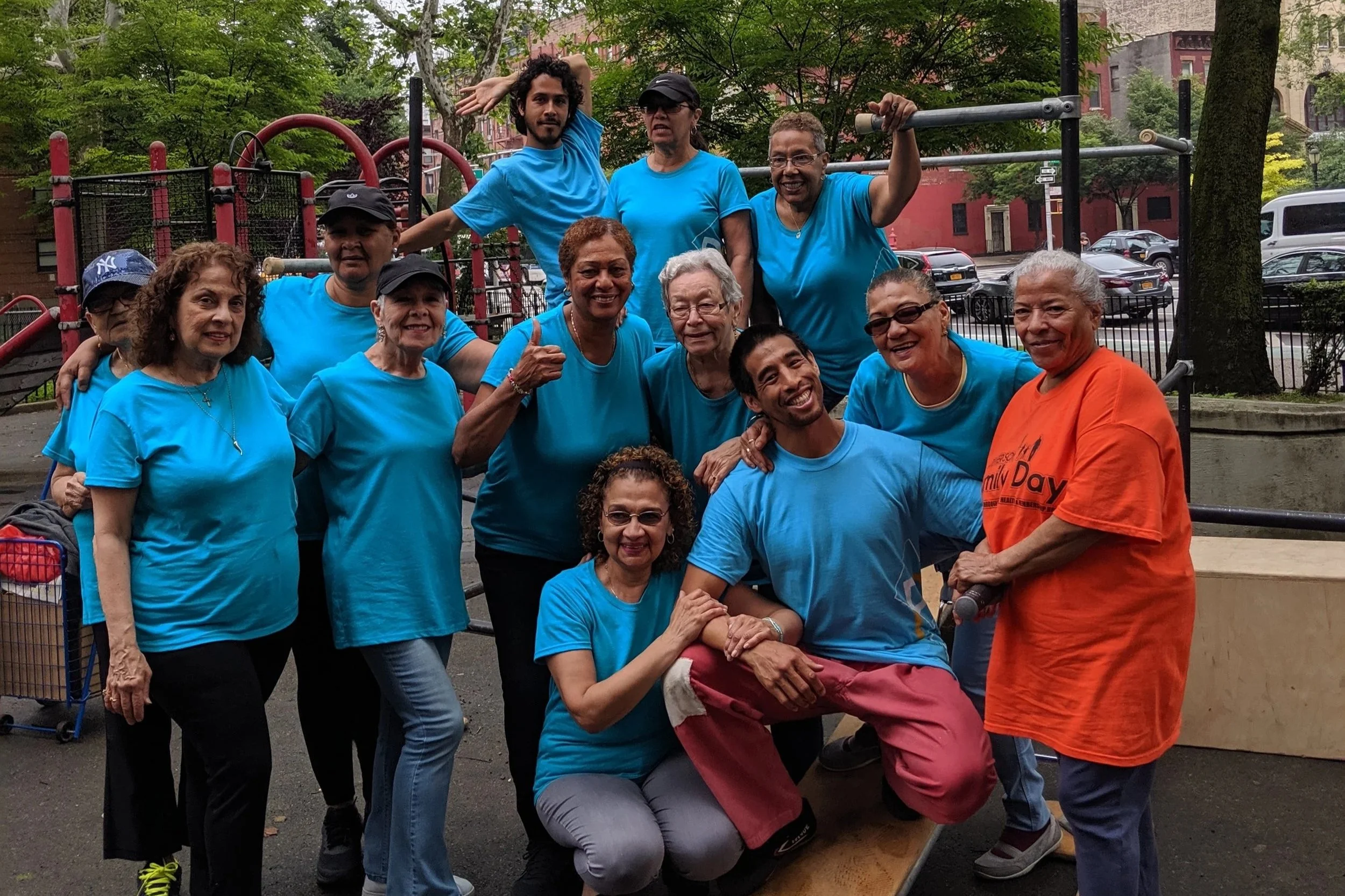
On-site in (Hell’s Kitchen, Elmhurst, East Harlem) or virtual.

Low-pressure. No prep required.

Moving Rasa partners with organizations, collectives, and institutions to create non-extractive spaces for connection, reflection, and accountability—without requiring disclosure, diagnosis, or performance. Our offerings are welcoming of men, women, and gender-expansive people, and adaptable to the needs of your community.
In-person (NYC) or virtual • One-time sessions or short series • Sliding-scale options available

Partner with Moving Rasa

Trauma-aware, consent-led collaboration—rooted in choice, dignity, and care.

What we bring

We create gatherings that help people return to themselves and to one another—through invitations that support choice, pacing, and care. Our spaces are designed to be survivor-centered and relationship-forward, while protecting privacy and autonomy.

You can expect:

  • consent-led facilitation (opt in / modify / decline)

  • movement-optional participation (seated, still, or in motion)

  • clear boundaries and agreements

  • culturally responsive, community-specific adaptation

  • no expectation of disclosure or explanation

Our flagship framework: Movement Tarot

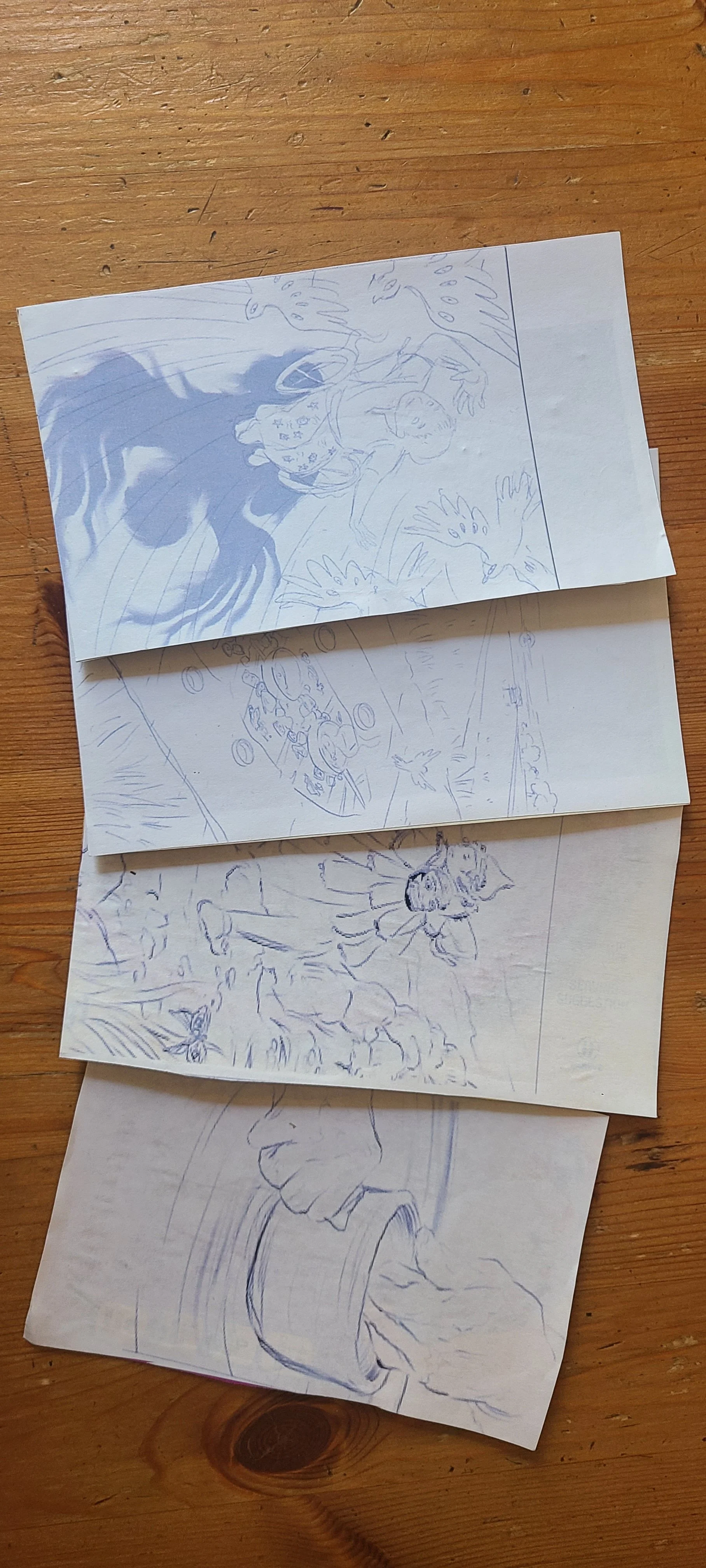
Movement Tarot is Moving Rasa’s flagship practice—a movement-optional facilitation framework that supports choice-led reflection and next steps through embodied prompts, spatial relationships, and shared language.

In partner settings, Movement Tarot helps groups explore themes like care, boundaries, accountability, and connection without requiring anyone to share personal history. People can participate through sensation, observation, journaling, or gentle movement—whatever feels supportive.

The Movement Tarot deck will be released publicly later this year. The framework already guides our partner offerings and community spaces.

Partnerships are flexible and co-designed

There isn’t one “right” way to partner with us. We’ll shape an offering that fits your community, capacity, and constraints—whether that means a single session, a short series, or an ongoing rhythm.

We can work:

  • in-person, virtual, or hybrid

  • with small groups or large audiences

  • with staff teams, community members, youth, or mixed groups

  • with communities where participation needs to be quiet, low-pressure, and choice-centered

Ways we can partner

Choose a format—or start with what you’re hoping to support, and we’ll recommend a best-fit starting place.

1) Movement Tarot Circle (60–120 min)
A guided group experience using movement-optional prompts for reflection, shared language, and next steps.

2) Workshop / Gathering (60–120 min)
A consent-led, trauma-aware offering focused on grounding, boundaries, care practices, and connection—adapted to your context.

3) Short Series (3–6 sessions)
A time-bound container that builds shared language and repeatable practices over several weeks.

4) Staff Support / Team Session
A space for regulation, reflection, and relational skills—especially supportive for frontline teams and high-stress environments.

5) Custom Container (co-designed)
For communities with specific needs, constraints, or cultural considerations. We build with you, not for you.

This is a good fit if you…

support communities impacted by interpersonal or systemic harm

  1. want trauma-aware work that is non-clinical and non-extractive

  2. serve survivors while honoring a wide range of lived experiences

  3. work with men or mixed-gender communities around care and accountability

  4. need spaces that protect choice, pacing, and dignity

  5. want offerings that don’t add heavy administrative burden

What to expect

We start with a short orientation conversation, then propose a shape that fits. We’ll align on accessibility needs, facilitation agreements, and the simplest path to getting your community into a supportive space.

We won’t ask for private participant details, disclosures, or clinical information to begin.

Start with a Partner Orientation Conversation

A low-pressure conversation to explore fit, context, and next steps. Bring what you know—you don’t need a complete plan.

In that call, we’ll cover:

  • who you’re serving and what you’re hoping to support

  • constraints (time, staffing, space, access, budget)

  • a best-fit format to start (circle, workshop, series, or custom)