
Contributing to the NAPIESV Wellness Guide
What does healing look like when it is rooted in culture?
That question sits at the heart of the NAPIESV Wellness Guide, a resource created by the National Organization of Asian Pacific Islanders Ending Sexual Violence (NAPIESV). Rather than offering a single model of wellness, the guide brings together the voices of cultural bearers, activists, healers, artists, and community practitioners from across Asian American, Native Hawaiian, and Pacific Islander communities. Together, they share practices that recognize healing as deeply connected to culture, identity, creativity, relationships, and the body. NAPIESV developed the guide in response to the need for culturally grounded wellness resources that honor the diversity and strengths of our communities and complement traditional support services.
Moving Rasa was honored to be one of the contributors.
Our contribution offered movement-based practices that invite people to reconnect with themselves through awareness, play, and relationship. Rather than asking people to perform or "do it right," these invitations encourage curiosity—exploring how our bodies, gestures, environments, and relationships can become places of discovery and healing.
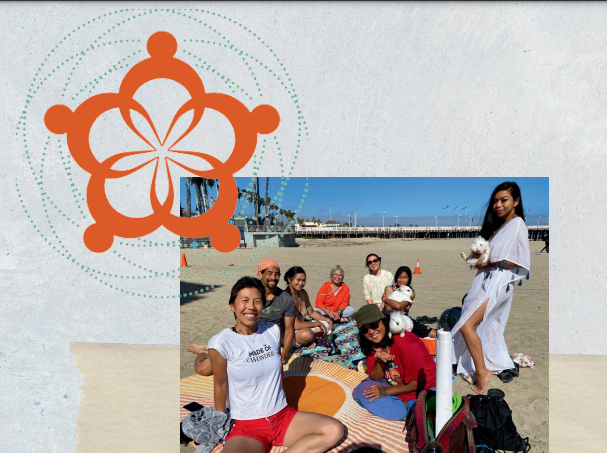
After over a year of virtual meetings to develop the Wellness Guide, we met in person once restrictions eased up to test out the activities and commune with one another!
This philosophy aligns closely with NAPIESV's vision of wellness. Healing is not simply an individual process or a clinical intervention. It is also cultural. It lives in the stories we inherit, the traditions we carry, the ways we gather, the ways we move, and the communities that remind us we are not alone. NAPIESV emphasizes that culturally specific healing practices can address the physical, emotional, mental, and spiritual dimensions of well-being in ways that mainstream approaches often overlook.
We are deeply grateful to NAPIESV for creating a space where so many forms of knowledge could stand alongside one another. To be included among cultural bearers, artists, activists, and healers working toward the collective well-being of API communities is an honor.
Healing grows stronger when we learn from one another. We hope the practices we shared encourage survivors, advocates, and community members to discover that possibility can begin with something as simple as noticing, moving, and relating differently.