
How we Work
Moving Rasa is an embodied, relational practice that helps people and communities build awareness, consent, and connection through lived experience. Rooted in Southeast Asian philosophy and shaped through community-based practice, it also draws from trauma-informed, relational, and somatic approaches across different cultural contexts. Through tools, shared spaces, personal practice, and partnerships, Moving Rasa helps people reconnect with their bodies, values, relationships, and capacity to respond with more honesty and choice.
Why This Work Matters
Many people live with isolation, trauma, overwhelm, and inherited ways of relating that make connection harder. We also live in worlds that teach us to distrust our own experience and force us to adapt to systems that disconnect us from what we feel, need, and know.
These conditions affect how people move through family, community, culture, leadership, and everyday life. They shape whether people feel a sense of belonging, whether they can respond to harm with awareness, and whether they have the support to stay connected to themselves and others.
Moving Rasa creates spaces where people can slow down, sense what is true, practice consent, and build the capacity to be with difference, tension, emotion, and care. We believe healing is not only personal. It is relational, cultural, and collective.
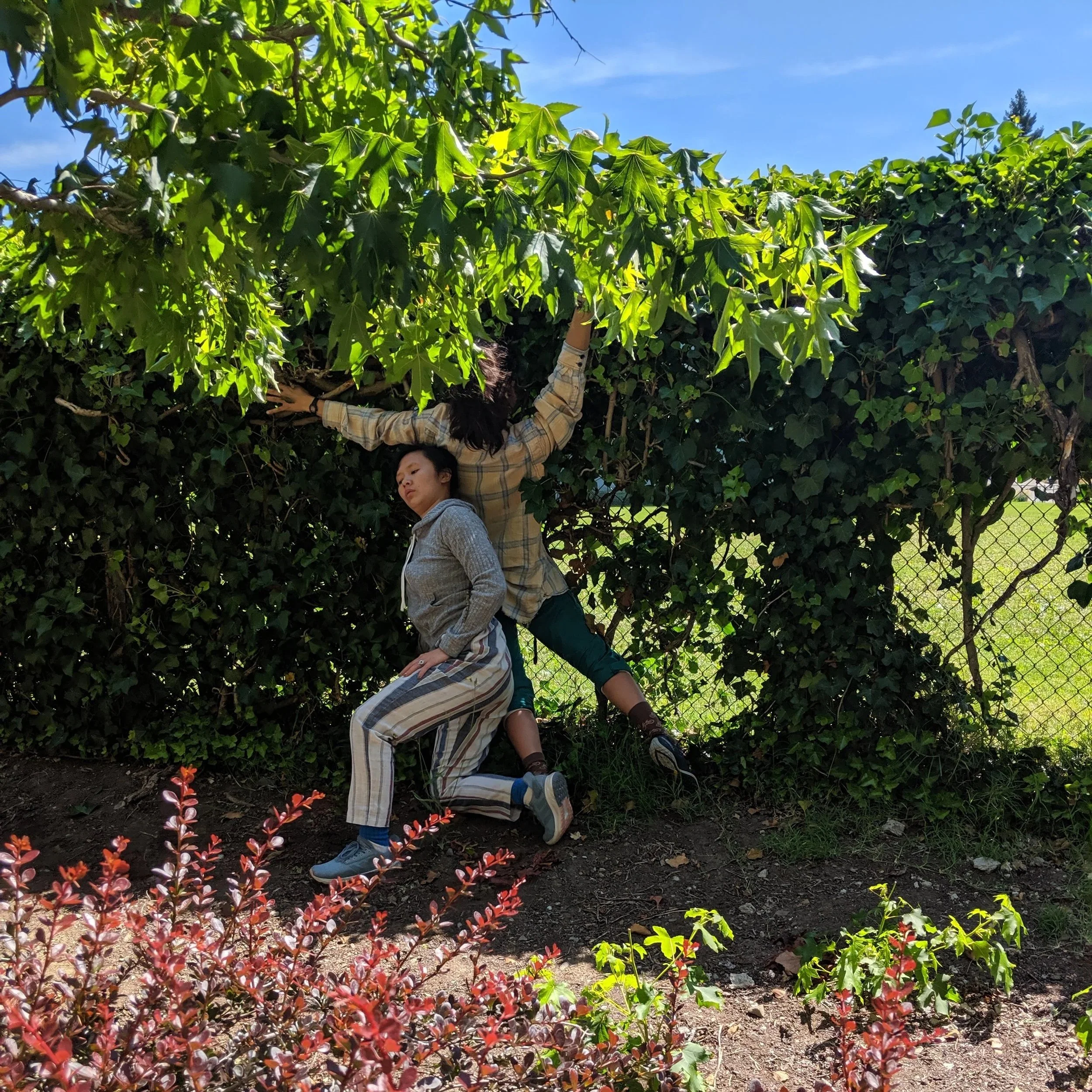
Our mission and values shape how we design tools, spaces, and partnerships that support awareness, connection, and relational change. Moving Rasa currently takes shape through four connected forms of practice:
Tools: Discovery Cards
The Discovery Cards offer an accessible entry point into the practice. Through images, prompts, and guided reflection, they help people slow down, notice patterns, and explore their relationship with themselves, others, and the world around them. They can be used independently, in guided readings, or as part of shared practice.
Practice Spaces
Moving Rasa is often practiced in shared spaces where people explore movement, reflection, and relationship together. These gatherings create room for listening, accountability, and discovery, and include both open offerings and spaces designed for specific communities.
Deeper Practice
For some people, the practice becomes something they want to carry into everyday life more intentionally. Through one-on-one work, dyad, and small group spaces, Moving Rasa supports people in shifting patterns connected to their bodies, relationships, choices, and sense of what matters.
Partnerships & Facilitation
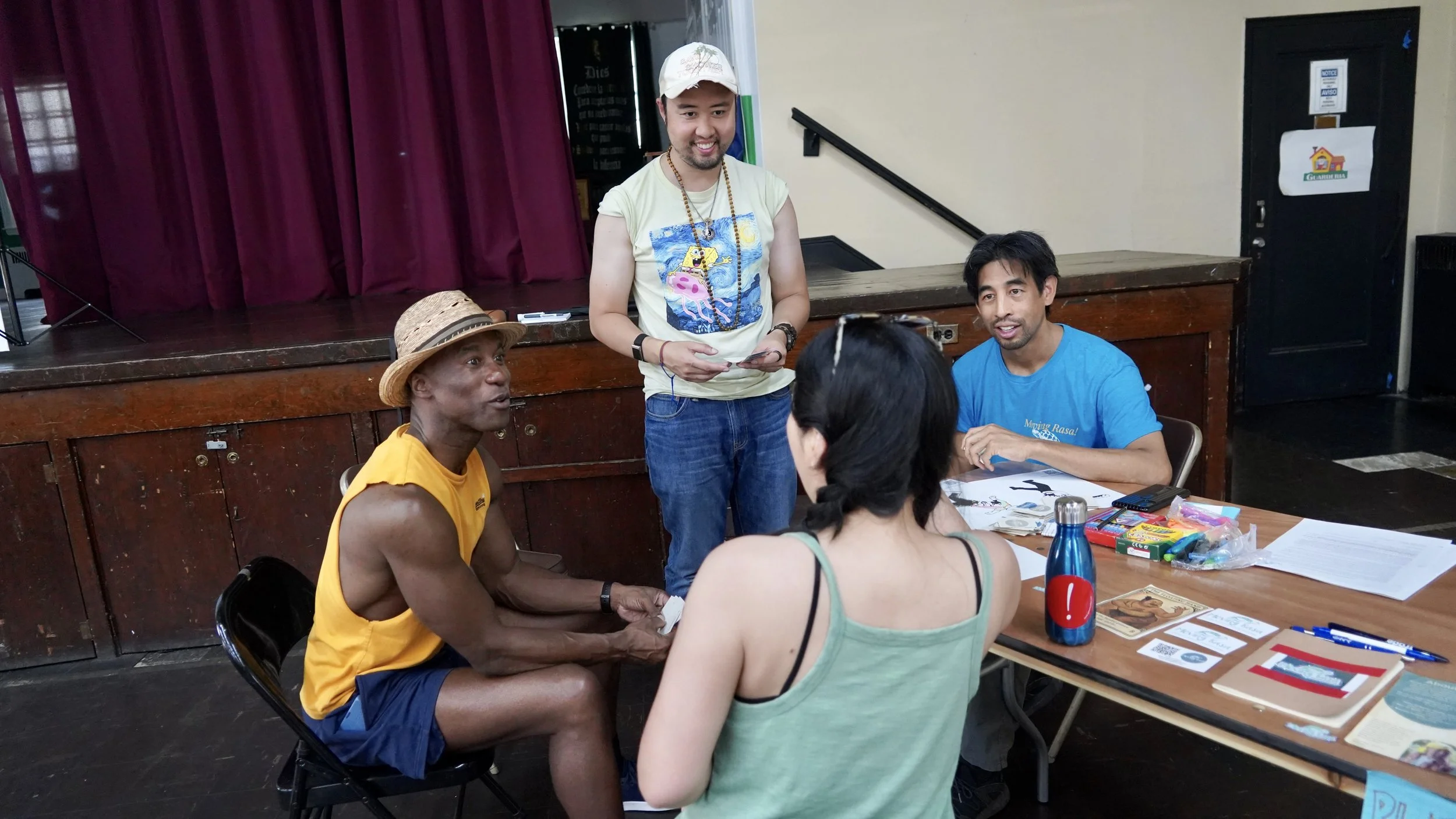
Moving Rasa also works with organizations, leaders, and communities who want to bring embodied, relational practice into their own spaces. This includes workshops, conferences, collaborative programming, and pathways for learning to facilitate the work with others.
Across these forms, the work supports people in noticing patterns, building relational skills, and developing more choice, clarity, and connection in how they live. This includes community-based nonprofit work such as survivor-centered healing spaces, men’s circles, and accessible gatherings, alongside paid offerings and partnerships that help sustain the broader ecosystem.
How Change Happens
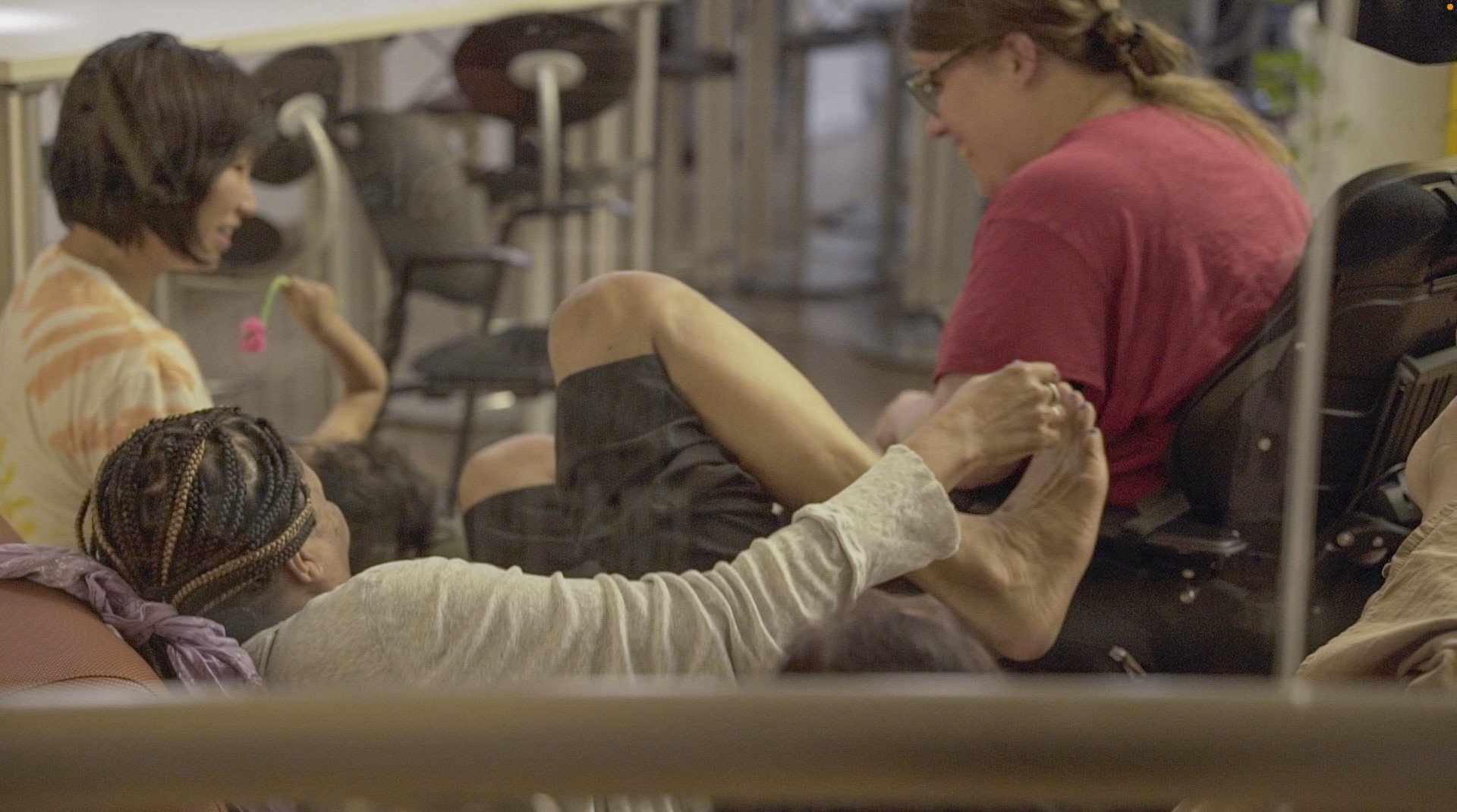
Moving Rasa is grounded in the belief that people change through experience, not just explanation.
Change happens through a few core conditions:
Embodied awareness
People are invited to notice how patterns live in the body, in habit, reaction, pacing, tension, gesture, and attention. This helps make the invisible more visible and opens the possibility of responding with more choice.
Relational practice
This work is not only internal. People practice with others through witnessing, conversation, shared reflection, and movement when desired. In community spaces, participants support one another in noticing patterns, repatterning habits, and building more conscious ways of relating.
Choice and consent
Moving Rasa does not depend on performance. The practice makes room for different levels of engagement where movement is embraced, from big locomotor movements to subtle imagings. Choice and consent form the foundations for trust and meaningful participation.
Personal integration
For some people, the work becomes something they want to carry into everyday life more intentionally. Through one-on-one work, dyad, and small group practice, people explore how the patterns shaping their bodies, relationships, and decisions can begin to shift so that more choice, clarity, and dignity become available in how they live.
Ongoing practice tools
The Discovery Cards extend the practice beyond a single session. They offer prompts, images, and pathways that help people slow down, notice patterns, and explore their relationship with themselves, others, and the world around them through personal practice, guided readings, or in shared spaces.
Together, these help people practice new ways of sensing, relating, and responding so that change becomes lived, not just understood, and relational skill-building over time.
Sources & Lineage
Moving Rasa comes out of a relationship with culture, movement, community, and the lived experiences that have shaped the work over time.
It is rooted in Southeast Asian ways of sensing, feeling, and understanding relationships, and in diasporic experiences of navigating belonging, adaptation, and cultural memory.
It has also been shaped by trauma-informed and survivor-centered practice, relational frameworks, somatic and movement traditions, and the work of Black and Indigenous thinkers, artists, organizers, and healers whose work has helped illuminate the body’s relationship to power, land, care, and collective life.
These are not used as interchangeable methods. They are lineages of thought and practice that continue to inform how the work is held, adapted, and shared.
Specific influences include, Javanese dance, Pencak Silat and other martial arts practices; movement practices such as Parkour and Contact Improvisation; somatic frameworks such as Laban Movement Analysis, the Feldenkrais Method, Authentic Movement, and Martha Eddy’s Dynamic Embodiment work; relational frameworks such as Nonviolent Communication and Indigenous Family Therapy; and liberatory thinkers such as Resmaa Menakem, Paulo Freire, and Audre Lorde.
Moving Rasa continues to evolve through practice, partnership, and the communities it is in relationship with.
What Makes This Work Distinct
While Moving Rasa shares elements with somatics, facilitation, and personal development work, it is distinct in how it integrates embodied practice, cultural grounding, and relational learning into a lived, ongoing practice.
Experiential, not only Reflective
People do not only talk about patterns. They get to notice them in real time through movement, relationship, sensation, reflection, and practice.
Personal and Collective
The work helps people explore their own bodies, habits, and relationships while also attending to culture, power, belonging, and the environments they are part of.
Culturally Rooted
Moving Rasa emerges from Southeast Asian ways of sensing, relating, and making meaning, while remaining in active relationship with other lineages that shape the work. This gives participants access to a practice that honors specificity rather than assuming one universal way of healing or learning.
Relationship as practice
Consent, choice, witnessing, boundary, responsiveness, and care are not only discussed. They are built into how the space is structured and how people engage with one another.
It changes how people perceive and relate.
Participants often begin to see themselves, others, and the world around them differently. Objects, environments, and relationships are no longer encountered as fixed or neutral, but as part of a living field of meaning, response, and possibility.
Beyond a single session.
Through ongoing community spaces, one-on-one support, and tools like the Discovery Cards, the practice can continue in everyday life rather than ending when the workshop is over.
This work is not confined to a single discipline.
It draws from movement, relational practice, cultural knowledge, and lived experience to create conditions for change that are felt, practiced, and sustained over time.
Moving Rasa offers more than insight. It offers conditions for people to practice new ways of being—with themselves, with others, and with the worlds they inhabit. This work is not only about helping people cope. It helps them perceive, relate, and participate differently.
Who We Serve
Moving Rasa is especially committed to communities navigating disconnection, harm, identity, belonging, and relational change.
Our work has grown in a deep relationship with:
Southeast Asian communities
Pacific Islander communities
BIPOC communities
survivors of sexual and relational violence
men, especially men of color, exploring masculinity and connection
We also partner with:
educators
facilitators
community-based organizations
cultural institutions
healing justice and survivor advocacy spaces
While our work reaches multiple audiences, its heart remains rooted in building more humane, consent-centered, and culturally grounded ways of being together.
Impact & Reach
Moving Rasa has engaged 3,000+ participants through workshops, community gatherings, virtual spaces, affinity spaces, and partnerships across a range of settings.
The work has taken place in:
community-based organizations
educational institutions
survivor advocacy spaces
cultural and arts environments
virtual and hybrid formats
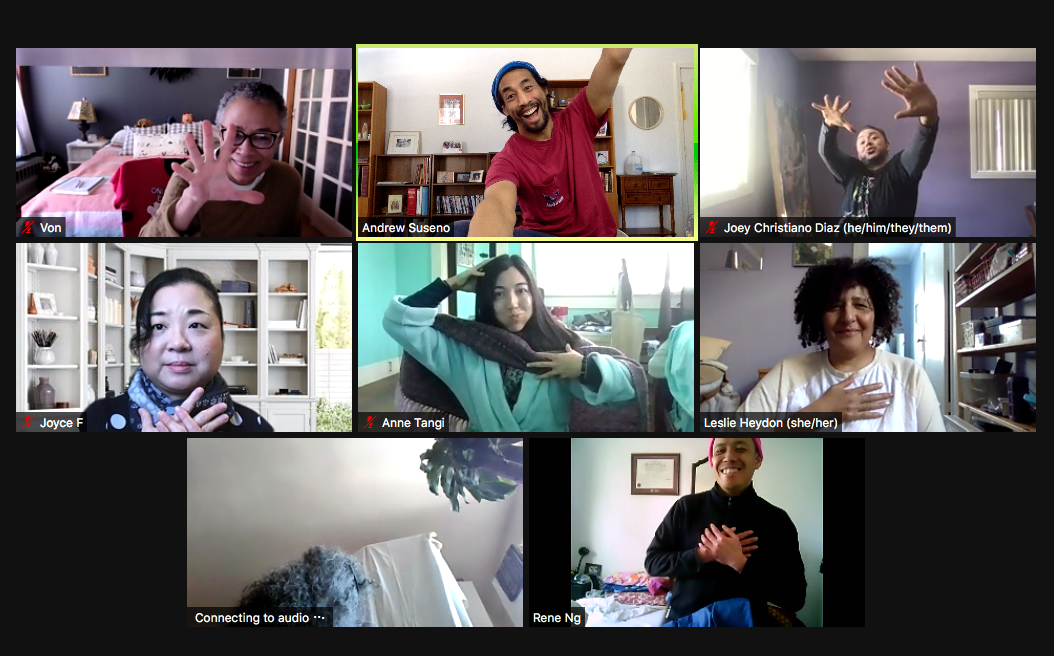
Programs have included movement-based workshops, men’s groups, survivor-informed healing spaces, affinity spaces, and ongoing community practice.
Across these settings, participants have built greater awareness of patterns in their bodies and relationships, strengthened their capacity for consent and responsiveness, reconnected with cultural memory and belonging, and practiced new ways of relating in real time.
Moving Rasa has collaborated with partners including the National Organization of Asian Pacific Islanders Ending Sexual Violence (NAPIESV), ManForward, Womankind, the National Education Association (NEA), and the New York City Department of Health and Mental Hygiene. Explore past collaboration in more depth.
These partnerships reflect the adaptability of the work across survivor advocacy, men’s healing spaces, education, and public health contexts.
The work continues to grow through partnerships, community practice, and tools such as the Discovery Cards, which extend the practice beyond a single session into everyday life.
Where This Can Continue
If something in this work resonates, there are different ways to step in.
You can experience the practice through workshops and community spaces.
You can explore a question through a Discovery Card reading.
You can begin building an ongoing relationship through coaching.
Or you can simply stay in conversation—following the work as it continues to evolve.
This is not a fixed path.
It is a practice that meets you where you are.