Field Notes #5:What Becomes Possible When No Can Stay No
I finished my second 4-part summer series with Womankind in August, working with survivors of domestic violence. The first explored our relationship to boundaries; this one explored our relationship to storytelling. People come into these sessions at very different places in their relationships to threat. Some experienced domestic violence as children and are now adults. Others are much closer to it in their present lives.
We used the Discovery Cards for these sessions, but this time we used them face down.
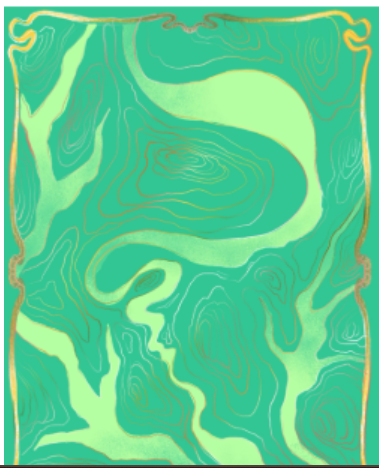
On the back of each card is a topographical map, shaped by islands and water. It is meant to serve as a vessel, inviting the diversity of our life stories and struggles to be held by its water and earth.
By starting with the “neutral” back of the card, participants did not have to layer their relationships to “their story,” with the card characters or the Living World inside them. Instead, they could place “their story” somewhere in their space- quite literally.
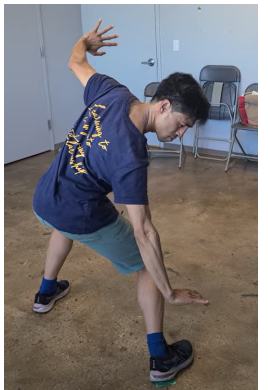
For instance, one person placed their card on the ground instead of in their hand. This placement allowed this participant to create a movement sequence where they stomped on the card three times with their right foot, then their left, to finally push the card away from them by swiping it behind them.
Our bodies and movement helped us discover and choose the distance, direction, and boundaries we actually needed to be in a consensual relationship with our story.
Another person placed their card high atop a doorframe. They methodically walked toward it, one hand slowly reaching for it, but then, gently and purposefully, before touching it, they dropped their hand and turned, walking away.
Each person found a different relationship that worked for them. There was no right way to interact with it or right distance to be from it.
Once they discovered their sequence, we honored it as a dynamic boundary they had created, no questions asked.
Then each person taught their "No" to another person in the group.
NO
The second person then became their dynamic boundary, while the original person could then explore the movement of their “Yes,” while maintaining a consensual relationship to “their story.” In many cases, people found ease, increased breath, and more spacious movement.
In this opening, we also explored how they felt more available to receive, gather, and give energy through their heads, hearts, and lower bodies. It was beautiful to watch.
Eventually, in this relational process, when someone is ready, they could turn the card over. The image on the other side would then enter the relationship and accompany them into another layer of discovery in countless ways. But for our sessions, the magic lay in the permission to never do so. No meant no. The cards helped us to move into the experience and freedom in that truth together.
-Andrew
P.S.
The first Discovery Card decks are now open for reservation.
I'm beginning to bring the Discovery Cards into the world. If you'd like one of the first decks, you can now reserve a First Edition deck. Our hopeful print date is the beginning of 2027. Your early support demonstrates your support. It will help fund the remaining artwork and bring the deck into production.
Not ready to reserve one?
Experience the free Discovery Card practices